
Following Leon County Recent Arrests
The Leon County Detention Center is run by the Leon County Sheriff's Office, and its official inmate search is the place to start. Someone in county custody now should show up there. It is not an archive of every arrest. LCSO, Tallahassee Police, the Florida Highway Patrol, and other agencies all book arrestees into the same facility. A released, transferred, juvenile, sealed, or federal case may not appear at all.
LCSO stopped posting booking reports on its website and social media on January 17, 2025. The channel ended. The arrests and the records did not. Booking activity continues. The two time-window guides cover what still works, without pointing you to a PDF that no longer exists.
| Window | Current official route | What it can establish | Photo status |
|---|---|---|---|
| Same day | 24 Hour Arrests, roster and LCSO Connect | New intake or present county custody, subject to processing lag | Not assured on the web roster |
| Several days | Arrest Log, records requests and official releases | Selected or requested booking events, not a complete live blotter | Request from the custodian when absent |
| Ongoing custody | VINELink Check | Location and movement data supplied by participating systems | VINE is not a photo service |
Arrested Last Night in Leon County
Search the roster with the name as the person likely gave it. Then try a shorter spelling. Booking, identification, and posting all take time. LCSO promises no refresh schedule. The official LCSO Connect app is a second interface for daily bookings and inmate lookup. Still no answer on an urgent custody question? Call Detention at 850-606-3500. VINE can track a person once a matching custody record exists. It cannot give the final court outcome. A missing name does not mean no arrest happened. The person may have bonded out, moved to another jurisdiction, entered federal or immigration custody, or hold a protected record, and the same-day arrest guide walks through the fallback steps.
Search the Leon County Jail Roster
Leon County officially calls the facility a Detention Center. Some state reports call it the Leon County Jail. Same place. The online form offers first name, last name, ethnicity, and gender. It shows no public panel of booking photos with results.
| Search field | Best use | Limit |
|---|---|---|
| First and last name | Primary identity search | Spelling, punctuation, aliases, and common names can mislead |
| Ethnicity | Narrowing similar names | Never sufficient identity proof |
| Gender | Additional filter | Use only with other matching facts |
| Booking or case identifier | Ask Records or check the Clerk | A jail booking number, Clerk case number, FDC DC number, and ICE A-number are different identifiers |
- Open the official roster and record the date and spelling searched.
- Compare any result with another lawful identifier, such as date of birth or booking number.
- Check LCSO Connect when the web interface is blank or appears delayed.
- For immediate confirmation, contact Detention rather than assuming the screen is real time.
- Use the Clerk docket later for charges and disposition; the roster only answers a custody question.
The official roster page is shown below so readers can recognize the government interface.
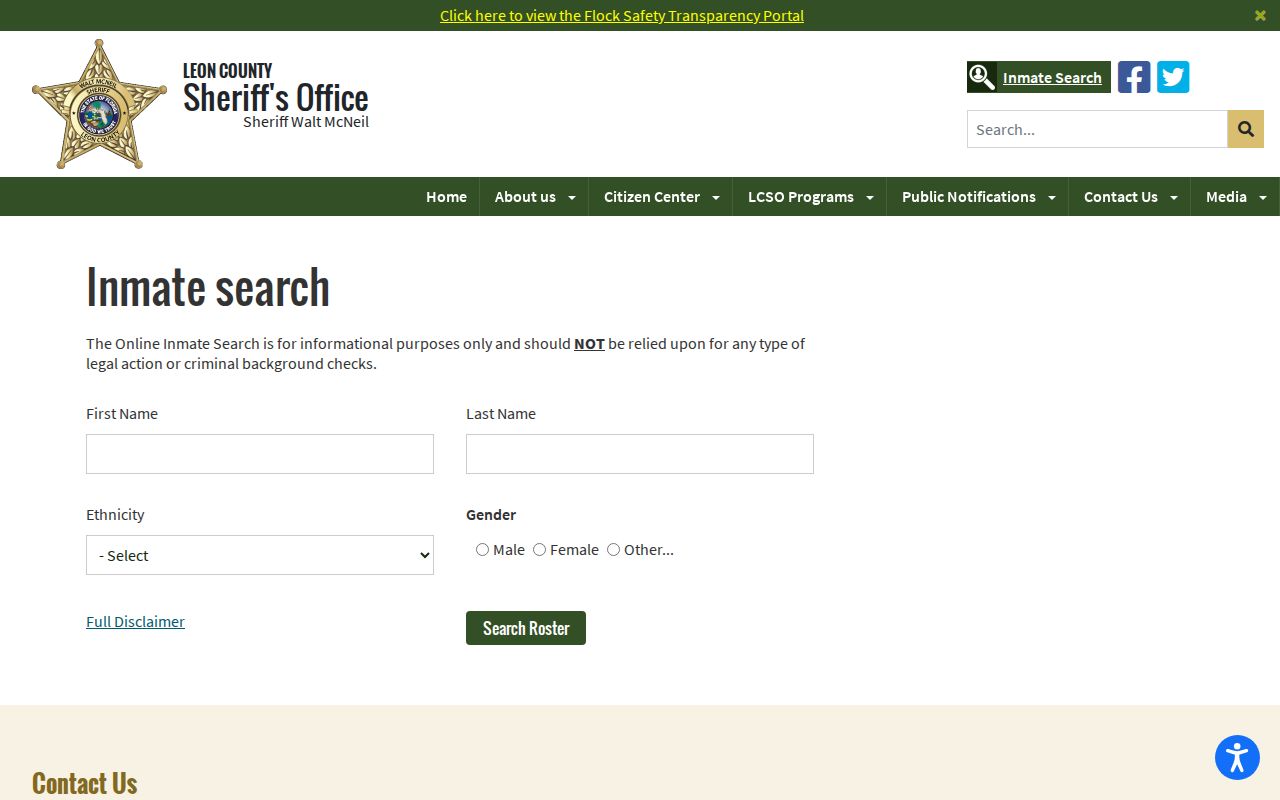
The official roster page displays its search controls, not a gallery or a promise that every recent arrest stays visible.
Where Leon County Arrests Appear
No one source covers every custody stage. Official records come first, since they name the responsible custodian and offer the cleanest path to a confirmed answer.
| Channel | Official? | Coverage and photo caution |
|---|---|---|
| LCSO inmate search | Yes | Current county custody; web photos were not reliably visible during research |
| LCSO Connect | Yes | Daily booking and inmate functions; timing and image loading are not guaranteed |
| Leon Clerk criminal division | Yes | Filed arrest paperwork, docket, bond events and final disposition; not live custody |
| LCSO/TPD releases | Yes | Selected cases only; LCSO may include requested or release-related photos |
| WCTV, WTXL, Tallahassee Democrat, WFSU | No, editorial | Selected local reporting, not a complete arrest log |
| Busted Newspaper, Mugshots.com, Mugshots.zone, and the Arrests.org-branded page | No | Copies may be stale, incomplete, misidentified, or detached from disposition; never use as custody confirmation |
The Apple listing for LCSO Connect documents the sheriff's mobile booking and inmate tools.
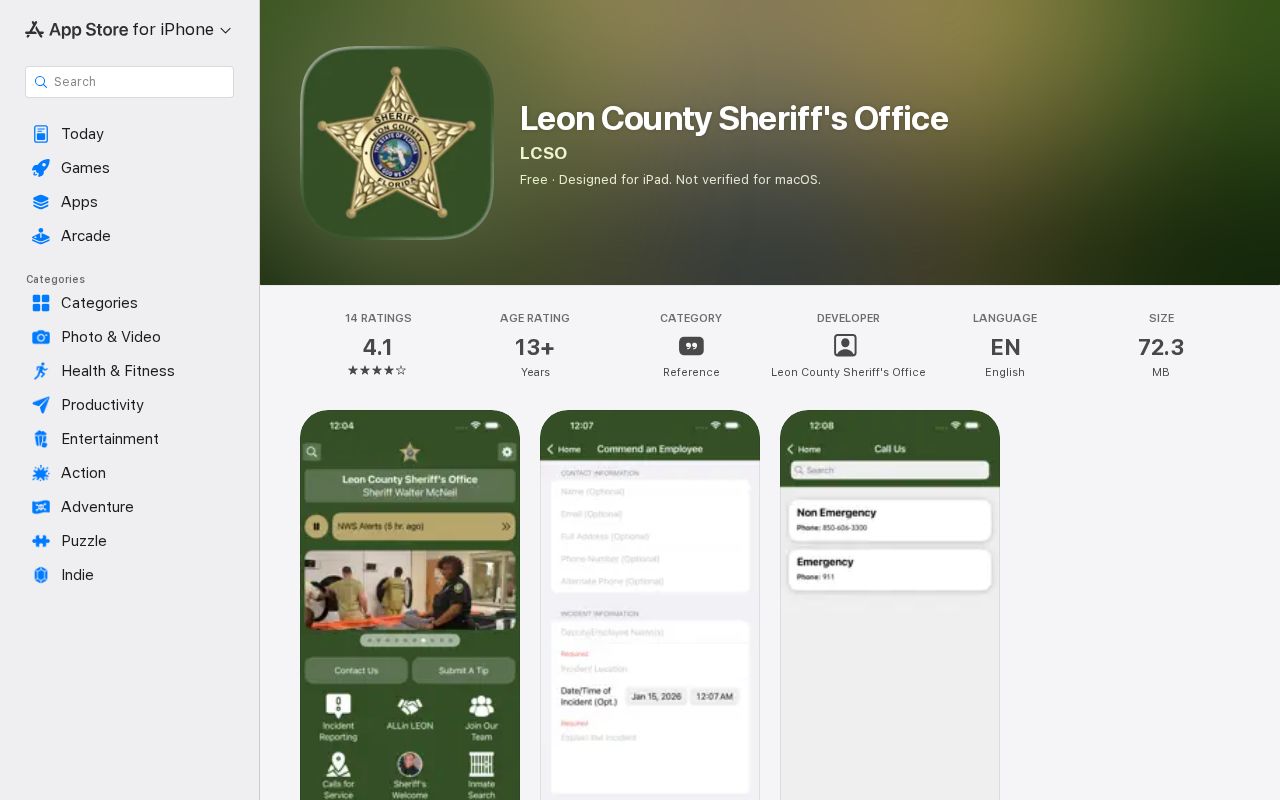
The app is an official alternate interface. It is not a complete archive or a real-time photo feed. The RecentlyBooked Florida index shows why a county label deserves a check before you lean on any private source.
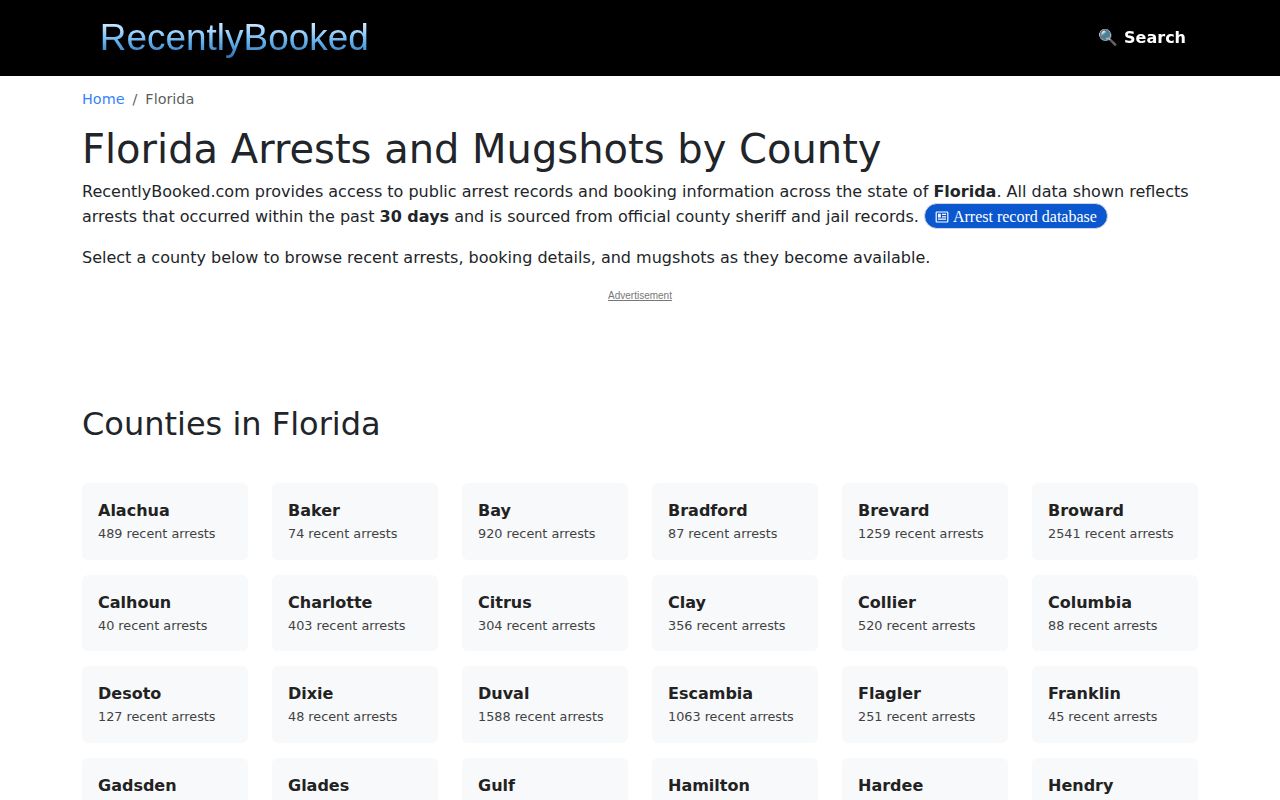
The index does not currently serve Leon County. Treat it as an example, not a live local feed or custody source.
Official Leon County Search Path
Match the source to the stage of the case. The LCSO roster and app cover county intake and current detention. VINE follows custody movement once a record enters a participating system. The Clerk docket carries the court case. FDC, BOP, and ICE handle other custody. Private pages and news stories can point toward a name or event, but neither can confirm where someone is now.
- Search the LCSO roster by name and note the date, spelling, and custody statement shown.
- Compare LCSO Connect when the web roster is blank or a booking is very recent.
- Call Detention when an urgent answer cannot wait for an online update.
- Use VINE for a matched person’s custody location and release or transfer alerts.
- Check the Leon Clerk docket for charges filed in court and the final disposition.
- Request the booking record or photograph from the correct records custodian when it is not posted.
Which source confirms release? A roster change may hint at release. It does not explain the method or the outcome, so confirm through LCSO or VINE, then read the Clerk docket for later court action.
Recent Arrests by City
Tallahassee is the county seat and Leon County's only incorporated city. Other neighborhoods and nearby places sit outside that label. Tallahassee Recent Arrests explains the two-record path. TPD holds its own arrest and incident reports. LCSO runs the county booking destination and custody systems. That split matters, because the arresting agency is not always the one holding the person or the booking photo.
What a Leon County Arrest Record Shows
An arrest report covers the enforcement event itself. A detention booking record documents intake, and a Clerk case follows the prosecution, so request the record that matches your question.
| Field | What it means |
|---|---|
| Name and descriptors | Identity information as entered; compare more than a name |
| Booking number and time | Jail event identifier and intake timestamp, not the arrest time or court number |
| Booking type | May distinguish a new arrest from a recommitment |
| Arresting agency and officer | Originating agency, which can differ from the jail operator |
| Charge and count | Charges recorded at intake, subject to later change |
| Bond and custody status | Temporary status that may change after first appearance or another order |
| Release date and method | Exit from custody, not dismissal of the case |
| Booking photograph | Intake image whose publication depends on policy and exemptions |
| Case and disposition | Clerk-side record of filings, hearings, plea, dismissal, adjudication or sentence |
Probable-cause narratives belong to the reporting agency, so credit them that way. Medical, classification, protected victim, intelligence, juvenile, sealed, and expunged details may be withheld. Other details can be redacted under law.
The terms mark different events. Booking is jail intake and identification. Arraignment addresses charges in court. Bond is a release condition set by law or court order. A disposition is the later result, such as dismissal, a plea, acquittal, or adjudication. Expungement is court-ordered relief under Florida law. It's not the same as deleting a copied web page.
Leon County Mugshots and Arrest Photos
The LCSO public roster does not display booking photographs. Mugshots still surface in sheriff news releases, though. A records request is the other route. Give the person's full name, the approximate booking date, a booking number if known, the arresting agency, and any incident or court number. Ask specifically for the booking photograph. If the office withholds it, request the written exemption or redaction explanation in return.
A Florida Department of Corrections offender profile may show a photo once someone enters state custody, but that image says nothing about a current Leon County booking. The BOP locator reports federal custody without photographs. VINE sends movement alerts; it is not a mugshot source. For a Leon County booking photo, the request path above is the practical option.
Request a Leon County Arrest Record
The LCSO Records Management Bureau accepts requests four ways: the GovQA portal, mail, an in-person visit, or LCSO Connect. The office sits at 3333 West Pensacola Street, Suite 100, Tallahassee, FL 32304. Call 850-606-3317 first. Public hours run 8 a.m. to 5 p.m. weekdays. Plain language is fine, but precise details cut search time and cost.
- Identify whether the wanted item is the arrest report, booking record, photograph, commitment/release entry, or all of those.
- Give a full name, narrow date range, arresting agency, and known booking, incident, or case number.
- Ask for electronic delivery when practical and request an estimate before work begins.
- Review the response for redactions, exemption citations, deposit requirements, and the record’s actual custodian.
- Use TPD Records for a city arrest or incident report and LCSO Records for the jail-side booking file.
The posted fee schedule covers ordinary copy and certification charges. Extensive work can add labor or technology costs. Confirm the current amount before ordering anything. Florida law demands production within a reasonable time. It sets no fixed day count. The official records page lists the current request channels and office guidance.
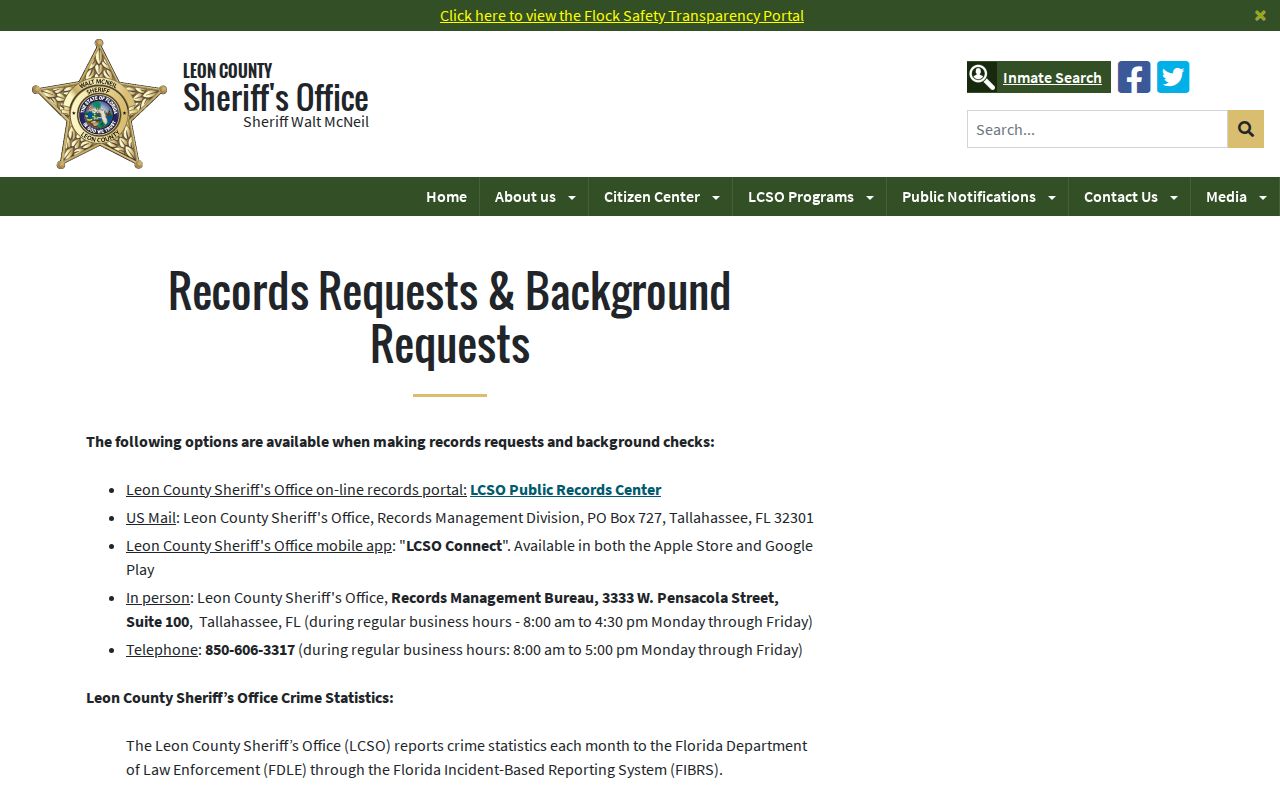
Public screens can drop an old booking entry. A direct records request reaches files that an interface no longer shows.
Florida Arrest Records, Removal, and Retention
Florida Chapter 119 starts from a simple premise: public records belong to the public. The statute opens the door, then carves out exemptions. Redactions can be narrow or broad. Access never guarantees a complete file, a current one, or an unredacted copy. Whichever agency holds the record decides whether a cited exemption applies. A denial or redaction should come with an explanation.
Booking-photo publishers answer to Florida Statute § 901.43. The law targets companies that solicit or accept payment to remove a photo. One written request triggers a free removal. A covered publisher must pull the image within the statutory period. Nothing in the statute forces LCSO to erase a lawful government record. The official Florida statute page holds the current text.
Sealing or expungement is a courtroom process, not a website form. FDLE issues the certificate of eligibility. A judge decides the petition. Eligibility turns on the record and the person's history. Ask a qualified Florida lawyer for legal advice. Juvenile files, victim information, sealed or expunged records, and intelligence material all need special handling.
Florida's GS2 schedule keeps the record copy of a booking and the commitment and release lists for one anniversary year after release, subject to an audit condition. That is only a floor, though. A legal hold, an open investigation, another schedule, or local practice can stretch retention longer. No schedule promises when a web listing disappears. For an old item, ask LCSO whether it remains on file, was lawfully disposed of, or was transferred. The Clerk may hold the court file while the full jail archive sits elsewhere.
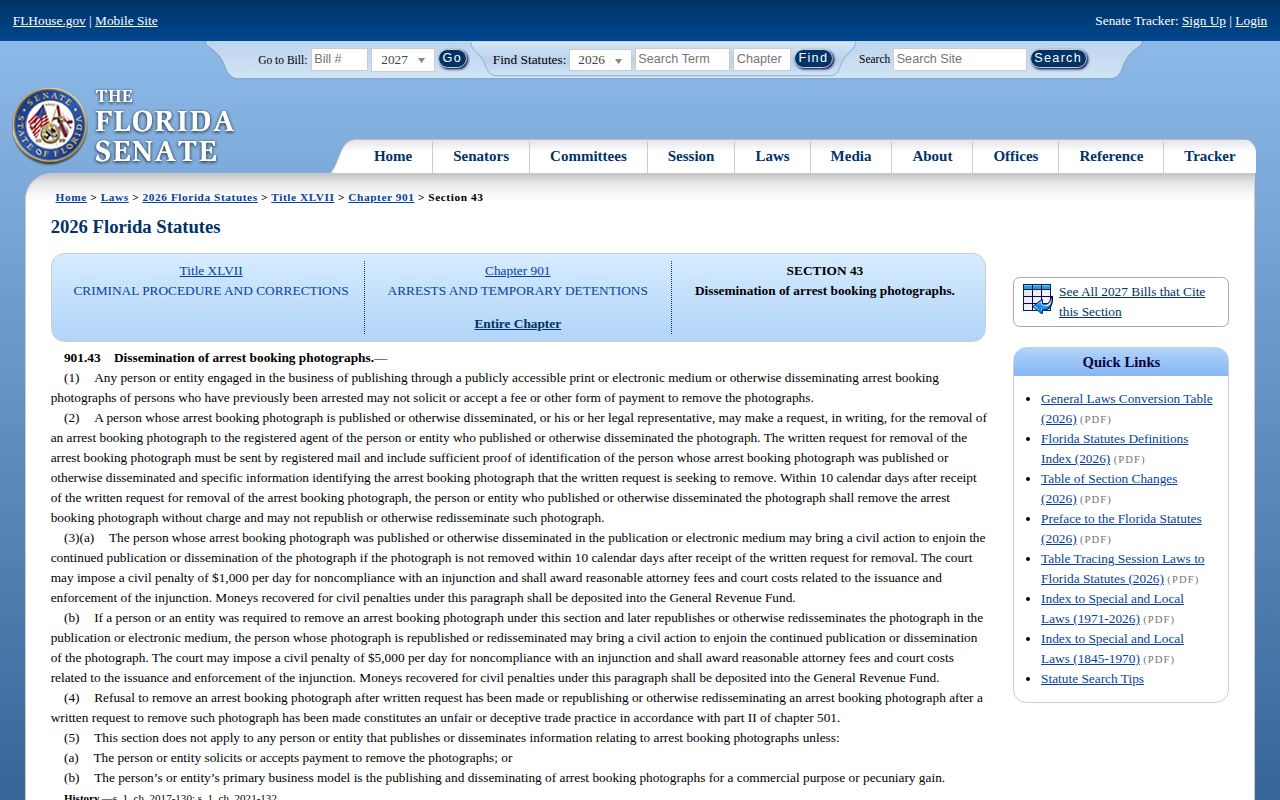
The statute targets commercial publication conduct. It does not erase the government source record or call every booking image inaccurate.
Leon County Warrants and Wanted Records
The LCSO Warrant Search is the official list. It shows first- and second-degree felony warrant leads. Two groups stay off it: warrants older than five years and warrants issued within the past two months. A listing may include name, date of birth, charge, details, and a photo when one exists. A blank result proves nothing.
FDLE runs a statewide Public Access System as a second check. That portal requires defined name inputs and a CAPTCHA, updates every 24 hours, and warns against acting on any result. Verify status before anything else. The LCSO Warrants & Civil Division answers at 850-606-3450, and the court or an attorney can confirm too. A listing does not prove current custody. Never approach or detain a listed person. Use an official tip channel instead, or call 911 in an emergency.
After a Leon County Arrest
A Leon County arrest creates two paper trails. The jail record tracks custody. The court record tracks the case. At a first appearance a judge can take up probable cause, counsel, bond, conditions, and the next event. The Leon County Clerk's criminal division holds felony, misdemeanor, and criminal-traffic files, plus the initial arrest paperwork, dockets, hearings, and dispositions. Roster entries can vanish after release.
Search the Clerk with whatever identifiers you have, then read the docket in order. Prosecutors amend or decline booking charges; judges move bond; outcomes range from dismissal to acquittal, plea, withheld adjudication, adjudication, or sentence. The LCSO custody screen answers a narrower question.
| Record state | Best Leon County source | What a missing result means |
|---|---|---|
| Just booked | LCSO roster, LCSO Connect, Detention | Intake or publication may not be complete |
| In county custody | LCSO roster and VINE | Verify spelling, transfer, and protected-record limits |
| Released | LCSO records, VINE history where available, Clerk docket | Release from jail does not end the court case |
| Sentenced to state custody | FDC Offender Search | A county booking number will not work as a DC number |
| Federal or immigration custody | BOP or ICE locator | Florida VINE and the county roster do not cover those systems |
Custody Beyond the Leon Jail
Not every Leon County arrest ends at the county jail. People move through state, federal, and immigration custody, and each stage has its own lookup. The Florida Department of Corrections Offender Search covers state prisoners. It also covers some supervised or released populations. It won't show fresh county bookings. Search it by name or DC number, and match a second identifier to be safe. A DC number is not an LCSO booking number. An FDC photograph reflects the state stage of custody explained in the booking-photo section, not the local jail. Federal cases are different. The Bureau of Prisons locator handles federal inmates but posts no photos. Immigration custody runs through the ICE Online Detainee Locator. It needs an A-number or exact personal details. U.S. Marshals custody often takes a call to the agency or court. Florida VINE tracks participating county jails, FDC, and DJJ, though not BOP or ICE. Figure out the custody stage first. You'll avoid drawing the wrong conclusion from the wrong database.
Why the Leon Arrest Feed Changed
In its January 2025 announcement, LCSO ended booking-report posts on its website and social media. That was a publishing change, nothing more. Arrests, records, and photographs still exist. The strongest path now runs through the current roster, LCSO Connect, a records request, VINE, the Clerk, and select official news releases. A booking photo can exist without showing up in a daily feed. An empty PDF directory means Leon County stopped posting, not that nobody was arrested.
TPD Arrests Enter County Custody
Arrest jurisdiction and booking don't always sit with the same agency. A Tallahassee Police Department officer can make the arrest. LCSO books the person at the Leon County Detention Center. That split matters for searching. The city report and the county booking record live in separate places. TPD's public-safety map runs about 15 minutes behind. Its call descriptions can differ from the final outcome, so treat it as incident context rather than a jail roster. TPD also notes a limit on after-hours help. Routine arrests generally aren't handled by its Public Information Office after hours. For a plain booking question, the TPD Records Division and LCSO custody tools will get you further. A map marker won't.
When Booking Becomes a Court Case
A booking only becomes a court case once paperwork moves. The Clerk states that LCSO sends initial arrest paperwork for imaging and entry. It lands on the progress docket. Public access is allowed there. Its criminal-division guidance describes a typical 30-to-45-day arraignment or case-management path after formal charges. Someone can leave the roster long before that. Florida CCIS has also warned of technical difficulties affecting Leon updates. A docket that looks stale deserves a call to the Clerk. It doesn't mean the case vanished or the arrest never happened.
Protected Leon Booking Information
Some Leon County booking information is shielded by law. LCSO offers a Marsy's Law request form. A victim or qualifying representative can ask the Records Division to block disclosure. Some categories are exempt. Juvenile, sealed, expunged, victim-identifying, and other exempt details can't be treated as ordinary public booking content. A blank field or a redaction may be a lawful protection. The custodian's written explanation beats any guesswork from a copied page.
Leon Booking Record Costs
Copies of Leon County booking records carry set fees. The LCSO schedule lists $0.15 for letter-size pages, $1 for a CD or DVD, $3 for a thumb drive or Blu-ray, and $1 for listed photo prints, with deposit and staff-time rules for bulky requests. Those numbers come from an older PDF. Ask for a current quote before paying. A narrow name, date range, record type, and identifier can cut down search work. When a request demands heavy clerical or technology effort, the agency may give an estimate or require a deposit.
Florida Sealing and Expungement Steps
FDLE treats sealing and expungement as a staged legal process. Instant online deletion isn't how it works. Its guidance lists a $75 nonrefundable certificate-of-eligibility application fee and roughly 12 weeks to process a complete packet, followed by whatever court process the relief requires. Eligibility depends on the specific case and record history. Turn to the agency guidance or a Florida attorney. A commercial promise to erase every copied page can't replace an FDLE certificate and a court order.