
Leon County VINELink Coverage
The LCSO Victim Information page names one jail. The Leon County Detention Facility is among the Florida jails feeding VINE. Florida VINE also pulls records from the Department of Corrections. It adds the Department of Juvenile Justice too. Those are separate systems. A local entry means county jail custody. An FDC entry means state prison or supervision. VINE answers one narrow question. Where is this one person held right now? Alerts follow when that changes. It is no arrest log or mugshot gallery. TPD can make an arrest, but LCSO runs the jail that holds people. The Leon Clerk case search tracks the charges and where they end. The VINELink entry page is the public starting point for a search.

The capture documents the service interface, not a person or booking photograph.
Check a Leon County Arrest
Enter enough detail to separate people with similar names. A jail booking number is not an FDC DC number. For a fresh Leon County arrest, allow time for intake, identity checks, and data transmission before the record shows up.
- Open the Florida person search.
- Enter the legal name and any other permitted identifier.
- Compare all possible matches by facility, identifier, and custody data.
- Open the correct record and note the date and current status.
- Confirm urgent Leon jail results with LCSO Detention at 850-606-3500.
A blank result is not proof that no arrest happened. The person could be in intake or already released. They might be held in another county or in a federal system. LCSO ended public booking-report posts on the web and social media in January 2025. Its live inmate search and the LCSO Connect app still work. The Leon County arrest hub sorts those sources out.
Leon County Custody Result Fields
A VINELink result is a custody status. It is not the whole arrest file. Read the facility and the status together, since a transfer can move someone while the Leon County court case is still open.
| Field | Meaning |
|---|---|
| Name and identifier | Identity aids; verify more than a name. |
| Custody status | The participating agency's reported state. |
| Facility | The reporting jail or corrections system, not always the arresting agency. |
| Tentative release | Reported timing that may change. |
| Notification choices | Alerts offered for that record. |
The arrest report covers the event itself. The jail record covers intake, the Clerk docket covers hearings and outcomes, and each answers a different question about the same Leon County arrest. Custody status is not a case history.
Register for Leon Custody Alerts
Florida VINE registration is free. LCSO lists the covered events: release, transfer, escape, work release, a move to another jurisdiction, return to FDC custody, and death. Choices vary by reporting system.
- Open the matching record and select “Register for Notifications.”
- Choose an offered delivery method and enter the requested contact data.
- For phone notice, select a private four-digit PIN.
- Finish the confirmation and retain the record details.
- Update or cancel registration when needed.
Phone registrations get a safeguard. LCSO says the system retries every half hour for up to 48 hours until the PIN is entered. Each phone number can use a separate PIN. Release and escape calls can arrive at night. More than one phone or email can be registered. The Second Judicial Circuit says that helps when notice must reach separate contact points, but each registration should match the correct custody record. The service runs in English, Spanish, and Haitian Creole. A phone PIN just confirms you received the notice. It is not a jail booking number, a court number, or a code that changes anyone's custody status. The Second Judicial Circuit VINE page explains language and safety support.
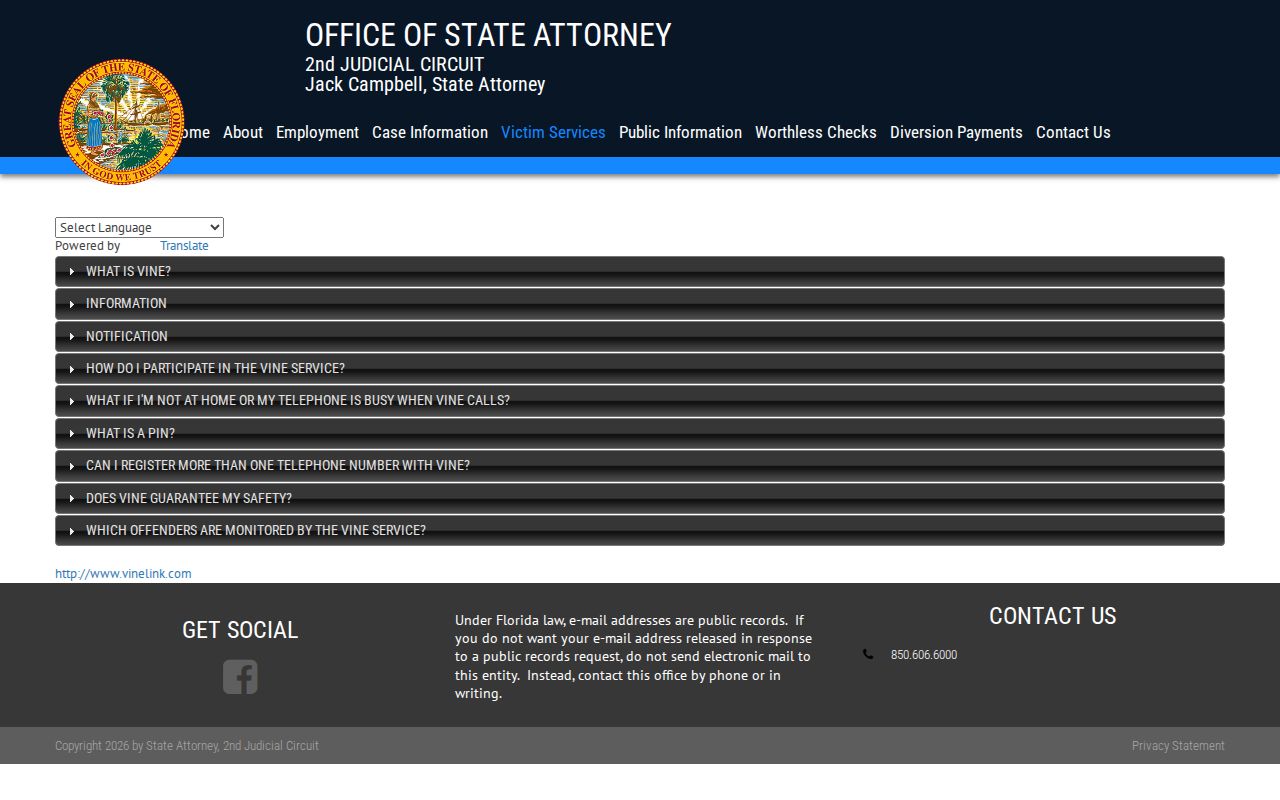
This local source supplements the statewide search with regional victim-service guidance.
Florida VINE Phone Registration
LCSO lists 1-877-VINE-4-FL, or 1-877-846-3435, as an around-the-clock registration line. It works when web access is limited. Registration still depends on the record the agency sends. VINE is confidential, but it cannot guarantee anyone's safety, so an alert should support a safety plan rather than replace one. Call 911 for immediate danger. If an alert conflicts with the roster, ask LCSO Detention which record is current, and see the LCSO instructions page for participation and phone mechanics.
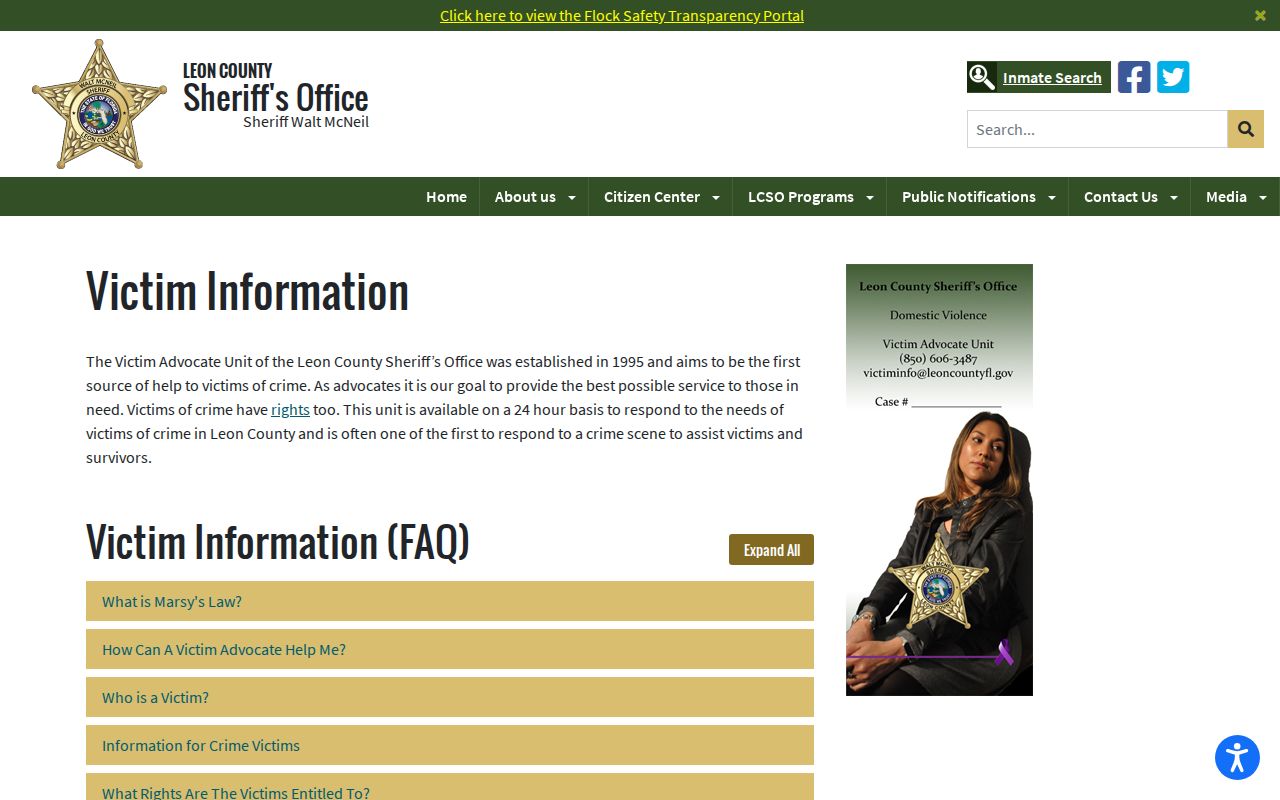
The county page confirms that Leon detention participates.
Leon Alerts Across Custody Systems
Custody changes can change your alert setup. Someone booked at the Leon County Detention Center starts in the county system. A sentence can move that person to FDC, where the state corrections record takes over. FDC keeps its own victim-notification form. A VINELink registration does not carry over to FDC Victim Services, so follow each agency's steps if you need both. Read each event with care. A transfer is not always release to the community; it may mean a move to another jurisdiction or a return to DOC custody. A tentative release date is not a court result. Release and escape calls can come at any hour, so VINE should back a safety plan, not replace one. Leon County has no separate SAVIN product. Official local sources use Florida VINE branding. Stick with the LCSO victim page, the Florida VINELink route, or State Attorney material instead of a county-branded result from an unrelated source. Take event labels literally. Work release is a custody status, not a sign that a case ended. Transfer to another jurisdiction means another agency took responsibility, and return to FDC custody points to the state system. Death notification is its own covered event. Tentative release dates can shift. Treat a date in VINE as an estimate, never a promise that release happens at a set hour.
Reconciling Conflicting Custody Results
Conflicting answers happen. Write down what each office reported and when. LCSO Booking and Releasing handles county custody questions, while LCSO Records holds the booking file and the Clerk keeps the case. A request can ask for an existing arrest record or booking photo, though no agency has to build a new report on demand. Florida law also lets these offices black out protected details.
LCSO Connect offers one more official route. Its app store description lists daily booking information, inmate search, records requests, and safety news. Reviews mention slow timing and images that fail to load. Those complaints are not agency promises. Confirm anything important through the jail or VINE.
A notification record still cannot explain a change in release terms. Bond amounts, a first-appearance order, a detainer, or a later ruling can all shift custody without appearing in VINE. The Leon Clerk criminal docket holds that legal context. A detainer is simply a request from another authority to hold someone or give notice before release.
Identity errors carry real weight. Check spelling, facility, and any identifier before registering. Two records can look alike and still belong to different people. If both seem plausible, call the reporting agency. A shared name, age, or charge proves nothing. Keep notification details private, and use only official channels to fix a mismatch. Save the confirmation information once registration is done.
If calls stop, reopen the matching record. The status, facility, or contact details may have changed. A new booking event can carry a different identifier than an older stay, so registering against the old event may miss the expected notice. Recheck the current official record and confirm its registration path.
Verify Leon County Custody Changes
VINE can lag a fresh booking. The LCSO inmate search has the same problem, and no refresh schedule is promised. Call the Leon County Detention Center at 850-606-3500 when timing matters. Its search takes first name, last name, ethnicity, and gender. It is not a full arrest archive. For same-day confirmation, another route helps. Compare your result with the official channels described under Leon County 24 Hour Arrests.
Federal custody needs a different locator. The Bureau of Prisons covers federal prisons. ICE runs its own detainee search. Florida VINE reaches none of those systems. FDC Offender Search serves state corrections, not an ordinary county pretrial booking.
VINE cannot open every restricted record. Juvenile matters stay out of the public search. So do sealed cases, identity mismatches, and nonparticipating records. The full arrest narrative is missing too, along with the probable-cause statement, bond history, and the final disposition. Those files sit with the arresting agency, LCSO Records, or the Leon County Clerk, within lawful limits. Note the event and time of any custody alert. The reporting agency supplies what the alert leaves out.
Release does not erase an arrest. A person can leave the roster while the booking file and court case go on.
Keep the facility name, reported status, and observation time. Those details help LCSO or the Clerk separate a current Leon County custody event from an older record under the same name.
Public Record Search
Sponsored Results